
 Speak with an experienced advisor!
 Rheumatoid Arthirtis and Its Impact on Life Insurance Prices
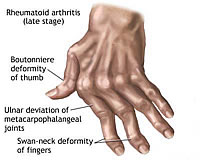 Rheumatoid arthritis (RA) is an autoimmune disease that causes chronic inflammation of the lining of the joints and other parts of the body. According to the Arthritis Foundation, RA affects approximately 1.3 million Americans and countless others around the world. People can develop rheumatoid arthritis at any age, but most often it occurs after age thirty and before age sixty. Seventy-five percent of all people with rheumatoid arthritis are women and they are usually affected less severely by the disease than men. It is suspected that there is a genetic component to developing rheumatoid arthritis; however, many people who develop the disease do not have a family history of it. Environmental factors, such as smoking, also seem to play some role in the cause of the disease. It is an incurable condition at this time and its insidious nature poses concern for insurers.
Other related medical conditions (or medical terminology) include Rheumatoid Arthritis, Arthirits, Joint Disease. Read below for more information about Rheumatoid Arthritis and receiving a life insurance quote from a life insurance specialist.
What Is Rheumatoid Arthritis?
Rheumatoid arthritis is a systemic disease which means that in addition to joints, it can affect other organs in the body. It occurs when the body’s immune system, for unknown reasons, begins manufacturing renegade T-cells that attack all of the body’s own tissue. Individuals will experience mild to severe flu-like symptoms including fatigue, fever and weight loss along with varying degrees of pain and inflammation of various body parts. The disease process progresses in three stages. Initially, the synovial lining, the lining surrounding joints, swells and causes pain, warmth, stiffness and redness. Next, the synovial lining thickens due to rapid cell division and growth, called pannus. In the last stage, the inflamed cells release enzymes that may digest bone and cartilage, often causing the involved joint to lose its shape, alignment and mobility and to experience more pain. The hands are most often affected, although any joint including knees, wrists, neck, shoulders, elbows and even the jaw are vulnerable. Joints are usually affected in a symmetrical pattern — the same joints on both sides of the body. Damage to joints can occur early, even when symptoms are only mild. The chronic inflammation of rheumatoid arthritis can cause chronic pain, permanent joint destruction, deformity, loss of function and disability.
Piecing Together the Puzzling Symptoms of RA
The onset of rheumatoid arthritis can be abrupt or subtle which makes diagnosing it in the early stages a puzzle. There is no single test that can clearly identify rheumatoid arthritis and each person with RA is affected differently. It is often missed while in its early stages since patients often dismiss joint discomfort as a “normal” ache or pain, and ignore or tolerate the symptoms for a long time before seeking treatment. The average time from the onset of symptoms to the official diagnosis is almost nine months. Because joint damage can occur early in the onset of the disease, it is extremely important to identify it as quickly as possible. Doctors diagnose RA based on the existence of several factors outlined by the American College of Rheumatology. The list includes:
- Morning stiffness in and around the joints for at least one hour.
- Swelling or fluid around three or more joint areas simultaneously.
- At least one swollen area in the wrist, hand, or finger joints.
- Swelling or fluid of the same joint on both sides of body (symmetric arthritis).
- Rheumatoid nodules (firm lumps in the skin) usually found in pressure points of the body and most commonly in the elbows.
- Abnormal amounts of serum rheumatoid factor in the blood.
- X-ray changes in the hands and wrists with wearing away of bone around the involved joints.
A diagnosis of rheumatoid arthritis occurs if four or more of these conditions are present and the first four symptoms have been present for at least six weeks. Doctors prefer to examine joints when the disease is active due to chameleon-like nature of RA symptoms. It can mimic osteoarthritis, gout and fibromyalgia as well as other autoimmune diseases like systemic lupus erythmatosus (lupus). Infections can also cause joint inflammation. Rheumatoid arthritis symptoms can be erratic. For some, symptoms may be mild while others experience near-constant symptoms for months at a time. Sometimes, sufferers are asymptomatic. Doctors who suspect RA will need patient input to assist in piecing together the diagnosis. Patients should provide a detailed list outlining the frequency, severity and time of day when symptoms occur for the doctor. A physical examination by the doctor to inspect joints for signs of inflammation or damage will follow. Laboratory tests, to screen for inflammation in your blood or joint fluid, will be ordered along with x-rays to fill in any missing pieces of information needed for diagnosis:
- Anti-CCP — antibody test
- Erythrocyte sedimentation rate (ESR or “sed rate”)
- C-reactive protein (CRP) — indicates inflammation
- Rheumatoid factor test (RF) — positive in about 75% of people with symptoms
- Complete blood count (CBC)
- Synovial fluid analysis
Studies have shown that early aggressive treatment of RA can limit, or at least forestall, joint damage, which in turn limits loss of movement, decreased ability to work, higher medical costs and potential surgery.
Rheumatoid Arthritis and Its Affect on the Body
As stated earlier, rheumatoid arthritis is a systemic disease. It can involve almost all organs. Several life-threatening complications can occur due to RA. Joint complication can cause the cervical spine becomes unstable as a result of RA. Rheumatoid vasculitis, inflammation of the blood vessels, can lead to skin ulcerations and infections, bleeding stomach ulcers and nerve problems that cause pain, numbness, or tingling; and may also affect the brain, nerves, and heart. RA may affect the heart, causing its outer lining of the heart to swell (pericarditis) or inflammation of the heart muscle itself (myocarditis). Both conditions can lead to congestive heart failure. In addition, many prescribed medications for RA have serious side effects.
A Treatment Plan for Living with RA
Developing a plan to manage RA is critical to successfully living with the disease though there is no cure. A comprehensive treatment plan may include some or all of the following:
- Medication to relieve pain and inflammation; to suppress the immune system
- Education to learn to protect joints with the help of an occupational therapist
- Rest to let injured tissues heal themselves
- Deep heat treatment
- Exercise to rebuild mobility and strength with a physical therapist
- Weight and dietary management
- Pain management, through cognitive therapy techniques, for relaxation, distraction and creative problem-solving
- Alternative therapies including acupuncture, homeopathy, Ayurvedic and aromatherapy
- Apheresis to remove antibodies from the blood (severe cases)
- Surgical synovectomy (lining replacement) total or partial joint replacement or joint fusion
Procuring Insurance with Rheumatoid Arthritis
Just as there is great variation in how RA affects people, there is also variation in how life insurers rate policies for those diagnosed with it. Insurers will want to know when the RA was diagnosed, the frequency and duration of symptom flares, any resulting deformities or disabilities and the degree of control achieved by medications. In certain instances, the medications used to treat RA will be considered an added risk, as many have serious side-affects, and will impact an applicant’s rating. A person’s ability to perform the activities of daily living and to live independently will also have a strong bearing on how an application is rated. Insurers rarely decline applications, but in cases where RA has affected the heart, lungs or blood vessels, it does occur.
How Can MEG Financial Help?
At MEG Financial, we have worked with many individuals across the country that have had related histories and have helped many obtain fairly priced life insurance. A number of these clients previously attempted to buy life insurance elsewhere but were either turned down or asked to pay a significantly higher rate. Our experience helping others with related problems is invaluable to you in identifying the insurance company that will treat you most fairly.
For more specific information or to obtain a custom quote, call MEG Financial today at (877) 583-3955. You may also submit this short form and an independent insurance agent will personally contact you to go over any questions or other concerns.