
 Speak with an experienced advisor!
 Pancreatic Cancer and Life Insurance
Will a diagnosis of pancreatic cancer make it difficult to purchase life insurance?
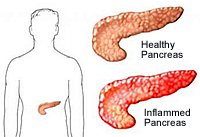 The pancreas produces fluids used by the body to digest food and hormones responsible for the regulation of how the body stores digested food. Pancreatic cancer is a difficult to diagnose due to the fact that the pancreas itself, an oblong gland located deep in the abdomen, is partially hidden behind the stomach and inside a loop of the small intestine. In its earliest stages, pancreatic cancer may affect a person with symptoms such as nausea, loss of appetite, weight loss, jaundice (yellowing of the skin) or pain in the upper or middle part of the abdomen that mimic other illnesses Often the tumor remains silent and undetectable until it has grown large enough to interfere with surrounding organs. In almost 50% of patients, the tumor has spread before being detected. Pancreatic cancer accounts for less than 3% of all cancers, but has the fourth highest mortality rate in the United States. It is more common among men than women and the risk of it increases with age, smoking and obesity.
The Staging and Treatment of Pancreatic Cancer
There is no singular cause of pancreatic cancer. Tumors can be genetic in origin, caused by changes in a person’s DNA, and passed through families; they can also occur through accidental cell replication or from exposure to chemical carcinogens. Statistics reveal that almost one third of all cases are due to cigarette smoking and scientists are exploring other possible risk factors including type 2 diabetes. Regardless of its origin, once diagnosed, the treatment of pancreatic cancer depends upon its staging. Staging is the process used to determine the severity of a disease based on a classification of established symptomatic criteria:
- Stage 1: Cancer is contained only in the pancreas or has just started to spread to nearby tissues such as the small intestine, stomach or the bile duct.
- Stage 2: Cancer has spread from the pancreas to nearby organs such as the stomach, spleen or colon, but has not entered the lymph nodes.
- Stage 3: Cancer has spread to the lymph nodes in the vicinity of the pancreas, but may or may not have spread to other organs.
- Stage 4: Cancer has spread to other organs such as the liver or lungs.
Only about 20% of pancreatic tumors can be removed surgically. The surgical technique known as a pancreaticoduodenectomy, or the Whipple procedure, is employed to remove tumors that are contained within the pancreas. Individuals with pancreatic cancer that can be surgically removed are often treated with chemotherapy and radiation after surgery to enhance survival rates. Tumors that are confined to the pancreas, but cannot be surgically removed may be treated with a combination of radiation therapy and chemotherapy. In instances where the cancer has metastasized, or spread, from the pancreas to other organs, chemotherapy alone is usually used. When pancreatic cancer cannot be removed completely with surgery, or if it has metastasized to other parts of the body, patients may be referred to medical research studies where newer treatment methods are being used.
Is Life Insurance an Option for Pancreatic Cancer Patients?
As previously discussed, more than 50% of patients diagnosed with pancreatic cancer have advanced cases due to the fact that the disease goes undetected or is misdiagnosed in its earliest stages. Because of this staging, insurers are unlikely to offer coverage of any type to individuals undergoing treatment for pancreatic cancer.