
 Speak with an experienced advisor!
 How Pacemakers Affect Life Insurance Prices
Pacemakers may not cause life insurers to skip a beat with your application.
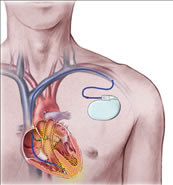 A pacemaker is a battery-operated device that sends electrical impulses to the heart muscle to maintain a normal heart rate and rhythm when it is damaged and cannot regulate the rate itself. Pacemakers are about the size of a silver dollar and are comprised of wires called leads, a pulse generator and battery. The pulse generator houses its battery and a tiny computer. The leads, there can be one, two or three, are threaded through the veins into the heart where they are implanted into the heart muscle. The leads send impulses from the generator to the heart muscle based upon the heart’s electrical activity. A physician can program the pacemaker to fire an electrical impulse through the lead and into the heart muscle when the heart rate drops to a minimum rate, at a steady rate regardless of the patient’s activity level or at a rate that changes with the patient’s activity level. The electrical impulse causes the heart muscle to contract and creates a heartbeat.
Most pacemakers are inserted under the chest wall through a small incision during a short surgical procedure using only a local anesthetic. Sometimes, more often in children then adults, the pacemaker is implanted surgically in the abdomen and requires general anesthesia
There are several different types of pacemakers that are used to treat various heart conditions:
- Single chamber pacemakers use one lead in the upper chamber or lower chamber of the heart.
- Dual chamber pacemakers use one lead in the upper chamber and one lead in the lower chamber of the heart.
- Biventricular pacemakers use three leads. One in the atrium, one in the right ventricle and one in the left ventricle.
Other related medical conditions (or medical terminology) include Pacemakers, Arrhythmias, Irregular Heartbeat, Abnormal Heart Rythym. Read below for more information about Pacemakers and receiving a life insurance quote from a life insurance specialist.
What Heart Conditions Require a Pacemaker?
A healthy heart regulates the rate at which it beats with its own internal pacemaker. When a heart becomes defective, beating too fast, too slow or irregularly, a pacemaker can correct it. There are several heart conditions that may benefit from implantation of a pacemaker:
- Congestive Heart Failure
- Syncope: Fainting spells
- Bradycardia: When the heart beats too slow, it can be a result of heart blockages, certain medications or by a group of conditions collectively referred to as sick sinus syndrome. Individuals diagnosed with bradycardia have abnormally low heart beat rates that can lead to light-headedness, dizziness, or even blackouts.
- Atrial Fibrillation: An irregular heart beat.
- Tachyarrhythmia: When the heart beats too fast, it can be a temporary or chronic condition. Temporary arrhythmia can be brought on by emotional stress, exercise or significant alcohol consumption and does not normally require pacemaker implantation.
- Chronic arrhythmia: This irregularity is often brought on by heart disease and can have serious affects on mortality.
- Cardiomyopathy: Unspecified heart muscle disorders.
Programming a pacemaker is done with an electromagnetic signaling device place on the surface of the skin above it on an as needed basis. Pacemaker batteries can last from five to fifteen years before they need to be changed.
Getting a Pulse on How Pacemakers Affect Insurance Eligibility
There may be a six month waiting period following implantation of a new pacemaker before a person is approved for a policy. Individuals with many heart conditions can lead normal lives and receive standard rates due to the success of pacemakers in restoring normal heart rhythms and effectively “curing” their condition. There are some instances where the age of a person, a more serious history of heart disease or a progressive heart disease may result in higher rated insurance and occasionally even denial. Insurers will want to know what heart condition you have, when the pacemaker was implanted, what medications you take and any complications you may have experienced since having the device implanted. Cardiac patients who quit smoking are better insurance candidates than those who continue.