
 Speak with an experienced advisor!
 Is a diagnosis of arrhythmia or irregular heart beat causing you to pay more for your life insurance policy?
- Understanding Irregular Heart Beats
- Types of Irregular Heart Beats
- Premature Beats or Premature Contractions
- Supraventricular Arrhythmia
- Bradycardia
- Ventricular Tachycardia
- Ventricular Fibrillation
- Irregular Heartbeats on Life Insurance Rates
- How can MEG Financial Help?
- Related Links for Irregular Heart Beat
 Irregular Heart Beats are abnormal heart rhythms, or irregular heart beats, and affect millions of Americans. According to the American Heart Association approximately 4,300,000 Americans experience arrhythmias. There are 638,000 hospital admissions annually due to arrhythmias, the most common arrhythmia being atrial fibrillation. About 70 percent of people with atrial fibrillation are between 65 and 85 years old. While most arrhythmias are harmless, some can be very serious and cause more than 250,000 sudden cardiac deaths per year. Life insurance companies will critically review applications with a history or episodes of arrhythmia in the health history to evaluate the success of treatment due to the potential severity of the condition.
Understanding the Heart’s Electrical System and Irregular Heart Beats
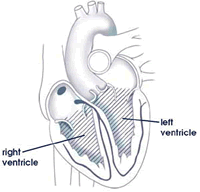
The heart is a pump that works on an electrical system that controls the speed and rhythm of the heartbeat. As the heart beats, an electrical signal originates in the sinus node (SA), the heart’s natural pacemaker, in the upper right chamber of the heart (atrium). These signals travel throughout the atria causing the atria to contract and pump blood into the heart’s two lower chambers (ventricles). The signal then triggers the atrioventricular node (AV) situated between the atria and the ventricles. From the AV node, the signal divides and travels down two separate paths to the ventricles causing them to contract and pump blood out to the lungs and the rest of the body. As the ventricles relax, the SA node begins the cycle again. This exact cycle must be followed for the heart to pump properly. As long as the electrical signal is transmitted normally, the heart pumps and beats at a regular pace. In a normal adult at rest, SA nodes send 60-100 electrical signals per minute. A problem with any part of the heart’s electrical system will result in an arrhythmia and cause the heart to beat too fast, too slow or irregularly. The term tachycardia refers to a fast heart rate of more than 100 beats per minute; bradycardia describes a slow rate of less than 60 beats per minute.
Other related medical conditions (or medical terminology) include Premature Ventricular Contractions, PVC’s, Tachycardia, Bradycardia, Wolff-Parkinson-White Syndrome, Atrial Flutter, Tachycardia, Bradycardia, Ventricular Contractions. Read below for more information on receiving a life insurance quote from a life insurance specialist with these medical conditions.
Types of Arrhythmias and Irregular Heart Beats
According to the Heart Lung and Blood Institute, there are four main types of atrial arrhythmias:
- Premature Beats or Contractions (PACs / PVCs) Premature contractions or premature beats are the most common type of arrhythmia. They are harmless most of the time and often don’t cause any symptoms. When symptoms do occur, they usually feel like a fluttering in the chest or a skipped beat. In otherwise healthy people, premature contractions do not require treatment. Premature beats occurring in the atria are called premature atrial contractions (PACs) while premature beats occurring in the ventricles are called premature ventricular contractions (Paces).
-
Supraventricular Arrhythmias : AF / Atrial Flutter /AVNRT
Supraventricular arrhythmias are tachycardia, or rapid heart rates, that start in the atria or the AV nodes. Atrial fibrillation (AF)is the most common type of serious arrhythmia. It occurs when the heart’s upper chambers contract in an uncoordinated way. An abnormal electrical signal results and causes the walls of the atria to quiver very fast (fibrillate) instead of beating normally. As a result, the atria aren’t able to pump blood into the ventricles properly. AF can cause electrical impulses to move through the atria at a rate of more than 300 per minute. Some of these abnormal electrical signals can travel to the ventricles, causing them to beat too fast and with an irregular rhythm. Though AF is not usually life threatening, it can bevdangerous when it causes the ventricles to beat very fast. Atrial flutter is similar AF in that both increase the speed of the electrical signals spreading through the atria. AF causes a fast, irregular rhythm, whereas atrial flutter causes a fast, regular rhythm. Atrial flutter is much less common than atrial fibrillation, but has similar symptoms and complications. Atrioventricular nodal reentry tachycardia (AVNRT) is a very fast heart rate that begins and ends suddenly and is caused by problems with the electrical connection between the atria and the ventricles. In AVNRT, electrical signals that begin in the atria, travel to the ventricles and reenter the atria causing extra heartbeats. This type of arrhythmia is not usually dangerous and tends to occur in young people, often during vigorous exercise. A unique type of tachycardia called Wolff-Parkinson-White syndrome is a condition in which the heart’s electrical signals travel along an extra pathway from the atria to the ventricles. This extra pathway disrupts the timing of the heart’s electrical impulses and can cause the ventricles to beat very fast. WPW syndrome can be life threatening. - Bradycardia – A Brady arrhythmia, or bradycardia, is a slow heart rhythm of less than 60 beats per minute, due to an abnormal SA (sinus) node. If the heart rate is too slow, not enough blood reaches the brain and can result in a loss of consciousness. Sometimes athletes will have slower than normal heart rates due to their fitness. In most cases, this is not dangerous and doesn’t cause symptoms.
Arrhythmias that originate in the ventricles can be very dangerous and usually require immediate medical attention. Ventricular arrhythmias include:
- Ventricular Tachycardia – Ventricular tachycardia is defined as three or more beats of ventricular origin in succession at a rate in excess of 100 beats per minute. It may last for only a few seconds or much longer and the heart’s rhythm is usually regular. It is not likely that a few beats of ventricular tachycardia will cause a problem; however, ventricular tachycardia that extends for more than a few seconds can be dangerous. Ventricular tachycardia can turn into more dangerous arrhythmias including ventricular fibrillation.
- Ventricular Fibrillation (v-fib) – Ventricular fibrillation, also called v-fib, occurs when disorganized electrical signals make the ventricles quiver instead of pump normally. When the ventricles do not pump blood efficiently, a person will quickly lose consciousness and will die within minutes if not treated. To prevent death, the condition must be treated immediately with defibrillation, an electric shock to the heart. V-fib may happen during or after a heart attack, or in a heart that is already weakened by another condition.
How Life Insurers Evaluate Irregular Heart Beat
The key to determining the significance an irregular heart beat will have on life insurability and rates will be based upon many criteria. Underwriters will need documentation explaining the type of arrhythmia, the heart’s response to treatment, overall medical history, results from diagnostic testing and the presence of other genetic or lifestyle risk factors. Arrhythmias that do not require treatment, or can be controlled with treatment, will be viewed favorably whereas chronic and uncontrolled cases may face decline. Ventricular arrhythmias are of significant concern. Due to the severity of the condition, any complicating issues of heart disease will significantly impact premiums and increase the possibility of an application being declined.
How Can MEG Financial Help?
At MEG Financial, we have worked with many individuals diagnosed with arrhythmias and irregular heart beats and helped many obtain competitive life insurance policies. Our experience is crucial to you in finding an insurance company that will treat you fairly.
For more specific information or to obtain a custom quote, call MEG Financial today at (877) 583-3955. You may also submit this short form and an independent insurance agent will personally contact you to go over any questions or other concerns.