
 Speak with an experienced advisor!
 Have you been denied coverage or are you paying too much for your life insurance because you had a heart bypass procedure?
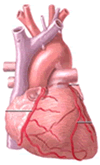 If you have undergone coronary by-pass surgery, the most common form of open-heart surgery, obtaining affordable life insurance is probably not out of reach. While some life insurance companies may not be interested in offering a policy at any rate, many will offer coverage but at significantly higher price levels. The key is to identify the life insurance company that will treat you most favorably based on your specific circumstances. The information below will provide you with an overview of coronary artery bypass surgery, its impact on life insurance rates and some helpful tips on getting the best possible rate.
Open Heart Surgery- Coronary Artery Bypass Defined
According to the American Heart Association, coronary artery disease (CAD) is the leading cause of premature death in the US for both men and women. CAD, also known as arteriosclerosis, is the result of the narrowing of the arteries that carry oxygen and nutrients to the heart muscle which allow it to pump blood effectively. Partial closure of these arteries can cause angina (chest pains) and complete blockage will lead to a heart attack. CAD can lead to irreversible damage to the heart and even sudden death.
For more severe cases of CAD, coronary bypass surgery is a highly effective treatment for correcting the condition. Heart bypass surgery is a procedure that redirects blood around clogged or hardened arteries so that blood flow and oxygen to the heart can be improved. With bypass surgery, a portion of a healthy blood vessel from another part of the body, commonly a vein in the leg, is “grafted in” to the aorta on one end and below the diseased area of the coronary artery on the other effectively rerouting blood flow so the heart can work efficiently.
In many cases, multiple vessels are by-passed. A double, triple or quadruple bypass can be necessary if more than one vessel is affected. Up to six bypass grafts can be done during a single surgical procedure.
Additionally, coronary bypass surgery doesn’t cure CAD. After successful open heart surgery, a balanced diet, a regular exercise program as well as taking the appropriate medications to control blood pressure and cholesterol is crucial to ongoing maintenance. If lifestyle changes are not undertaken, blockages can and will reoccur and repeat bypass procedures may be required.
Heart By-Pass Statistics
- According to the American Heart Association’s Heart Disease and Stroke Statistics over 420,000 bypass procedures were completed in 2004.
- The 2004 breakdown included 303,000 bypass procedures on males and 124,000 on females.
- The largest segment of the population requiring coronary artery bypass is males over age 65.
- In approximately one-third of all cases, the blockages return and the artery becomes narrow again.
- The cost of coronary artery disease and stroke in the US for 2007 is $431 billion according to the American Heart Association.
Coronary Artery Bypass Surgery is Avoidable
The need for heart bypass surgery results from lifestyle factors that are in most cases controllable. Life insurance companies are especially interested in these “controllable” factors and an individual’s responsiveness given their underlying CAD. The following factors are most important in evaluating an individual’s coronary heart disease:
- Smoking or tobacco use history,
- Elevated Cholesterol levels,
- Obesity or Excessively Overweight. Body Mass Index (BMI) in excess of 25,
- Lack of exercise,
- Hypertension or High Blood Pressure,
- Diabetes,
- High Fat Diet or Poor Diet,
- Stress,
- Family history of CHD.
The Impact of Open Heart By-Pass Surgery on Life Insurance Prices
If you have undergone open heart surgery requiring a bypass graft the price you pay for life insurance will be higher based on the severity of your condition. However, the likelihood of securing a competitive policy is good. Your specific underwriting health class will be determined by a number of factors including your health history leading up to the bypass surgery, the number of diseased vessels and the success of the surgery, your regular cardiac follow-up including any diagnostics tests since the procedure as well as the presence and number of risk factors noted above.
With coronary artery bypass surgery, other factors that affect life insurance rates include:
- Current age.
- Your age at the time the procedure was completed.
- The presence of any heart attacks prior to the bypass
- How many vessels were corrected?
- The results of follow-up stress tests or other cardiac test results.
- Any symptoms occurring since the procedure such as angina?
- The rate of progression of atherosclerosis since the bypass
With coronary bypass surgery, every life insurance company will postpone coverage or fail to make any offer for life insurance within the first 3-6 months post surgery.
A number of companies will begin to consider you for life insurance after 6 months but overall you can expect to be highly rated or pay an excessive price at best.
After 1 year post treatment, more companies will begin to consider for favorable life insurance and the likelihood of getting a better rate begins to increase assuming excellent medical follow up and proven lifestyle changes.
In general, if your bypass was done in response to abnormal diagnostic test, i.e. thallium stress test or treadmill EKG, and there was no prior heart attack and cardiac follow up and lifestyle compliance has been good, you can expect to pay an average or standard health rate with an additional 25% to 100% extra charge or rating.
If you have had a heart attack prior to your open heart surgery but have had good follow up with your cardiologist with normal cardiac diagnostic testing results, you can expect to pay a rate equal to standard plus an additional 75% to 200% depending on the functionality of your heart muscle.
If after your successful bypass procedure, you do not have adequate cardiac follow up or don’t implement the lifestyle changes necessary to reduce the risk for reoccurrence, you can expect to be postponed for coverage or pay an excessively high rate for your life insurance policy.
If you have any history of coronary artery disease and continue to smoke or use tobacco related products you can expect to be declined for life insurance.
Preferred health rates are not available if you have any history of coronary artery disease.
The majority of insurance companies will offer a life policy with a table rating or increased rate based on a diagnosis of CAD alone. The level of the table rating will be contingent upon the severity of your specific condition along with the presence of the risk factors listed above.
Bottom line is that some insurance companies will be more “open minded” than others when evaluating your mortality risk based on your history of bypass surgery. The key is to identify the companies that will treat you most fairly based on your individual health history.
How Can MEG Financial Help?
At MEG Financial, we have worked with many individuals across the country that have had related histories and have helped many obtain fairly priced life insurance. A number of these clients previously attempted to buy life insurance elsewhere but were either turned down or asked to pay a significantly higher rate. Our experience helping others with related problems is invaluable to you in identifying the insurance company that will treat you most fairly.
For more specific information or to obtain a custom quote, call MEG Financial today at (877) 583-3955. You may also submit this short form and an independent insurance agent will personally contact you to go over any questions or other concerns.