
 Speak with an experienced advisor!
 Will undergoing a cardiac catheterization negatively affect my insurance options?
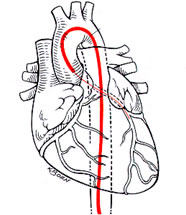 Cardiac Catheterization is a procedure that is both a diagnostic tool, used to obtain information about the heart and its blood vessels, and a therapeutic procedure employed to treat certain types of heart conditions. The most common reason cardiac catheterization is prescribed is to evaluate chest pain. It may also be performed on an emergency basis when a patient presents with a heart attack. When performed with angioplasty, cardiac catheterization can assist doctors in opening up blocked arteries and preventing additional damage to the heart following a heart attack. Though it carries a slightly increased risk when compared with other heart tests, cardiac catheterization is considered to be very safe when performed by an experienced team. The risk of serious complications ranges from 1 in 1,000 to 1 in 500 cases. Insurers may adopt a wait and see attitude for a period of time following catheterization procedures to evaluate the outcome of treatment before approving applications.
Other related medical conditions (or medical terminology) include Heart Catherization, Abnormal Cardiac Catherization, and Heart Tests, Heart Evaluation Procedures, Coronary Artery Disease, and Atherosclerosis. Learn more information on receiving a term life insurance quote with these medical conditions from our life insurance specialists.
A Diagnostic and Therapeutic Tool
Cardiac catheterization is used to determine pressure and blood flow in the heart’s chambers, to evaluate heart valves, to collect blood samples from the heart and to examine the arteries of the heart. The information revealed by the study may also be used to determine the need for heart surgery as heart defects or diseases, such as coronary artery disease, valve problems, ventricular aneurysms or heart enlargement are observable. Cardiac catheterization may also be performed on newborns and children to detect and treat congenital heart abnormalities. Therapeutically, catheterization may be employed to repair certain types of heart defects including the opening of stenotic (narrowed or constricted) heart valves, blocked arteries or grafts in the heart.
What to Expect When Undergoing Cardiac Catheterization
The procedure is performed in the hospital and admission may occur the night before the test or on the morning of the procedure. Prior to catheterization, a patient’s food and fluid will be restricted for six to eight hours.
The study is carried out in a laboratory by a trained cardiologist or radiologist with assistance from technicians or nurses. The patient will receive a mild sedative thirty minutes prior to the test to help him relax, however the patient will remain awake during the study. An intravenous (IV) line will be inserted into an artery or vein in the arm, neck, or groin (upper thigh) after the site has been cleansed and numbed with a local anesthetic. The only sensation a patient should experience should be one of pressure at the site. A thin plastic tube called a catheter will then be inserted through the IV and into the blood vessel. It will be carefully threaded into the right or left side of the heart using an x-ray machine that produces real-time pictures called fluoroscopy.
Cardiac catheterization procedures may last from one to several hours.
After the test, the catheter will be removed. Firm pressure will be applied at the insertion site to prevent bleeding. If the IV was placed in the arm, there may be discomfort at the IV site; if the IV was placed in the groin, you will usually be asked to lie flat on your back for a few hours after the test to avoid bleeding. Lying flat may cause some back discomfort.
Cardiac Catheterization Studies
Once the catheter is in place, dye or contrast material will be injected and pictures will be taken. When dye is injected into the coronary arteries the procedure is called coronary angiography or coronary arteriography. When a balloon on the tip is placed on the catheter, it is called percutaneous transluminal coronary intervention (PCI), a term which covers a variety of procedures performed to correct diseases of the arteries of the heart. It is also known as percutaneous transluminal coronary angioplasty (PCTA), coronary artery balloon dilation or balloon angioplasty. PCI may be performed for the following conditions:
- Primary pulmonary hypertension: High blood pressure in the arteries to your lungs
- Pulmonary valve stenosis: A congenital condition in which outflow of blood from the right ventricle of the heart is obstructed at the level of the pulmonic valve.
- Pulmonary embolism : A sudden blockage in a lung artery usually caused by a blood clot in the leg that breaks away and travels through the bloodstream to the lung
- Tetralogy of Fallot: A congenital heart defect that occurs in approximately 5 out of every 10,000 babies, affecting boys and girls equally, that changes the normal flow of blood through the heart. It involves four defects: A large ventricular septal defect (VSD); pulmonary stenosis; right ventricular hypertrophy or overriding aorta.
- Transposition of the great vessels
- Tricuspid regurgitation: A disorder involving backward flow of blood across the tricuspid valve which separates the right ventricle from the right atrium of the heart.
- Ventricular septal defect: One of the most common congenital heart defects; one or more holes in the wall that separates the right and left ventricles of the heart
A Safe Procedure with Risks to Consider
Before undergoing cardiac catheterization, patients should be advised of the risks involved. In general, there is a risk of bleeding, infection, and pain at the IV site and a very small risk that the soft plastic catheters could actually damage the blood vessels. The possibility exists that blood clots may form on the catheters and later block blood vessels elsewhere in the body. The contrast material injected into the catheter can also cause damage to the kidneys (particularly in patients with diabetes).
More serious risks include the following:
- Cardiac arrhythmias
- Cardiac tamponade: Compression of the heart due to blood or fluid build up in the space between the myocardium (the muscle of the heart) and the pericardium (the outer covering sac of the heart)
- Trauma to the artery caused by a hematoma, a semisolid mass of blood in the tissues
- Low blood pressure
- Reaction to contrast medium
- Hemorrhage : Loss of blood from a ruptured blood vessel
- Stroke
- Heart Attack
Candidates for catheterization who are allergic to seafood, have had a bad reaction to contrast material in the past, are taking Viagra, or who might be pregnant, should advise their physicians prior to undergoing the test.
Will Cardiac Catheterization Red Flag My Insurance Application?
Cardiac catheterization diagnostic procedures such as flouroscopy will/ will not negatively impact an insurance application, however, percutaneous transluminal coronary angioplasty (PTCA) does have a risk of blockage reoccurrence. Due to the natural healing process that occurs after an artery has been dilated during PTCA, treated arteries experience recurrent blockages in 25 to 60 percent of patients. As blockages tend to occur during the first two to four months following treatment, most insurance companies will defer applications for six months after the PTCA procedure. Applicants should make certain that their medical record is comprehensive and reflects excellent follow-up studies and otherwise favorable prognostic indicators by documenting positive cardiovascular factors such as the absence of previous scarring due to heart attacks; the absence of remarkable family history; and no compounding medical conditions. Noting adherence to positive lifestyle choices with regard to exercise and diet to improve cardiovascular health will be an asset to applicants with PTCA in their file.
How Can MEG Financial Help?
At MEG Financial, we have worked with many individuals across the country that have had related histories and have helped many obtain fairly priced life insurance. A number of these clients previously attempted to buy life insurance elsewhere but were either turned down or asked to pay a significantly higher rate. Our experience helping others with related problems is invaluable to you in identifying the insurance company that will treat you most fairly.
For more specific information or to obtain a custom quote, call MEG Financial today at (877) 583-3955. You may also submit this short form and an independent insurance agent will personally contact you to go over any questions or other concerns.