
 Speak with an experienced advisor!
 Is obesity affecting the price you pay for life insurance? Learn more about build, height and obesity and its impact on life insurance prices.
Weighing in on the effect of build, height and obesity on life insurance.
- Fast Facts About Obesity
- Health Risks Associated with being obese
- Obesity Weighs Heavily in Qualifying for Insurance
- How MEG Financial Can Help
- Related Links for Build – Height/Obesity and BMI
In 2004, the U.S. Centers for Disease Control and Prevention (CDC) ranked obesity as the number one health threat facing America. Obesity, which means too much fat, currently results in an estimated 400,000 deaths. In addition, more than 15 percent of children under 18 years old are classified as overweight. Obesity can negatively impact a person’s health, mental well-being, lifestyle and insurability.
Fast Facts about Obesity
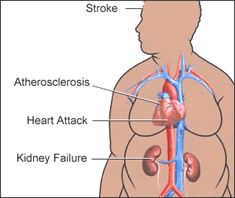 Body weight in adults typically remains constant for years even with changes in diet, climate or activity. Obesity occurs over time when a person eats more calories than he or she uses. Maintaining, gaining and losing weight becomes a balancing act between calories-in and calories-out and differs for each person. Factors that might tip the scale toward obesity include overeating, eating high-fat foods and not being physically active, however, obesity is not always a behavioral issue. Other causes such as hormone disorders related to the thyroid, adrenal glands, ovaries and pituitary that can also contribute to obesity.
The Body Mass Index (BMI) is a common measurement in evaluating whether a person is overweight or obese. It takes a person’s build into account because it factors weight and height in the equation. Both terms mean that a person’s weight is greater than what’s considered healthy for his or her height.
Computing BMI is a simple computation: divide a person’s weight (in pounds), by their height (in inches) squared, and multiply by 703. Plug the answer into the BMI Categories to determine whether the weight is considered healthy:
- Underweight = BMI (Body Mass Index) less than 18.5
- Normal weight = BMI of 18.5-24.9
- Overweight = BMI of 25-29.9
- Obesity = BMI of 30 or greater
Health Risks Associated with Obesity
The National Institute of Diabetes and Digestive and Kidney Diseases reports that obesity increases your risk of diabetes, cardiovascular disease and hypertension, stroke, arthritis, thyroid disease, polycystic ovary syndrome and some cancers. Smoking tends to increase these risks and adds to their complications. If you are obese, losing even 5 to 10 percent of your weight can delay or prevent some of these diseases.
More Pounds Equal More Insurance Risk
The percentage a person is overweight, or obese, correlates almost directly to an enhanced risk of premature death to insurers, so accurate height and weight measurements must be made available. Insurers are most concerned about cardiovascular risk factors resulting from obesity so providing evidence to document good cardiovascular function would include a recent stress test, family history, regular exercise program, good cholesterol levels and normal blood pressure readings. Obese and overweight non-smokers or those who quit smoking will increase the odds of obtaining more reasonably priced insurance.