
 Speak with an experienced advisor!
 Is a diagnosis of arrhythmia or irregular heart beat causing you to pay more for your life insurance policy? Learn more about heart arrhythmias and irregular heart beats along with information on receiving a life insurance quote from our specialists.
- Understanding Arrhythmia
- Types of Arrhythmias
- Premature Beats or Premature Contractions
- Supraventricular Arrythmias
- Atrial Fibrillation
- Atrial Flutter
- Paroxysmal Supraventricular Tachycardia
- Ventricular Arrhythmias
- Ventricular Tachycardia
- Ventricular Fibrillation
- Bradycardias
- Arrhythmias Statistics
- Risk Factors for an Irregular Heartbeat or Arrhythmia
- Impact of Arrhythmias on Life Insurance Rates
- How can MEG Financial Help?
- Related Links for Arrhythmia
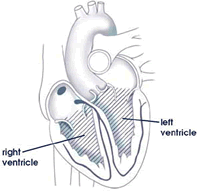 Arrhythmias are abnormal heart rhythms or irregular heart beats and affect millions of Americans. While most arrthymias are harmless some can be very serious and can even result in death. Therefore life insurance companies will be very concerned about any diagnosis of irregular heart beat and its severity. The information below will provide you with an overview of arrhythmia and its impact on life insurance rates.
Understanding the Heart’s Electrical System and Arrhythmias
The pumping of the heart works on an electrical system that controls the speed and rhythm of the heartbeat. As the heart beats, an electrical signal originates from special cells called the sinus node (SA) in the upper right chamber of the heart, or the atrium. These SA signals tell the heart to begin a new beat. In a normal adult at rest, SA nodes send bout 60-100 electrical signals every minute.
From the SA node, the electrical impulses are sent to the right and left atria causing the atria to contract and pump blood into the heart’s two lower chambers called the ventricles. The electrical signal then moves down to a group of cells called the atrioventricular node (AV node), located between the atria and the ventricles. Here, the electrical impulse slows allowing the ventricles time to finish filling with blood. The signal then leaves the AV node and travels along a pathway that divides into a right bundle branch and a left bundle branch. The signal goes down these branches to the ventricles, causing them to contract pumping blood out to the lungs and the rest of the body. The ventricles then relax and the process starts all over again with an electrical impulse in the SA node.
A problem with any part of the heart’s electrical system will result in an arrhythmia or irregular heart beat. With an arrhythmia, the heart can beat too fast, too slow or irregularly. When the heart beats faster than normal, it is called tachycardia and when the heart beats too slowly, it is called bradycardia. When either occurs, the heart may not pump enough blood to the body. This lack of blood flow can damage the brain, heart, and other organs resulting in heart disease, strokes and even cardiac arrest.
Types of Arrhythmias and Irregular Heart Beats
According to the Heart Lung and Blood Institute, There are four main types of arrhythmia: premature contractions, supraventricular arrhythmias, ventricular arrhythmias, and Brady arrhythmias. A summary of each of these types of arrhythmias follows:
- Premature Beats or Contractions (PACs / PVCs)Premature contractions or premature beats are the most common type of arrhythmia. They are harmless most of the time and often don’t cause any symptoms. When symptoms do occur, they usually feel like a fluttering in the chest or a sensation of a skipped beat. In otherwise healthy people, premature contractions do not require treatment. Premature beats occurring in the atria are called premature atrial contractions (PACs) while premature beats occurring in the ventricles are called premature ventricular contractions (PVCs).
- Supraventricular Arrhythmias : AF / Atrial Flutter /AVNRT Supraventricular arrhythmias are tachycardia or rapid heart rates that start in the atria or the AV nodes. Supraventricular arrhythmias include atrial fibrillation (AF), atrial flutter and paroxysmal supraventricular tachycardia (PSVT).
- Atrial Fibrillation (AF) AF is the most common type of serious arrhythmia. It occurs when the heart’s upper chambers, atrium, contract in an uncoordinated way resulting in an abnormal electrical signal. This causes the walls of the atria to quiver very fast (fibrillate) instead of beating normally. As a result, the atria aren’t able to pump blood into the ventricles the way they should.
In atrial fibrillation, electrical impulses can move through the atria at a rate of more than 300 per minute. Some of these abnormal electrical signals can travel to the ventricles, causing them to beat too fast and with an irregular rhythm. AF is not usually life threatening, although it can be dangerous when it causes the ventricles to beat very fast.
For more specific information, see atrial fibrillation and life insurance. - Atrial Flutter Atrial flutter is similar to atrial fibrillation, but instead of the electrical signals spreading through the atria in a fast and irregular rhythm, they travel in a fast and regular rhythm. Atrial flutter is much less common than atrial fibrillation, but has similar symptoms and complications.
- Paroxysmal Supraventricular TachycardiaParoxysmal (intermittent) supraventricular tachycardia (PSVT) is a very fast heart rate that begins and ends suddenly and occurs due to problems with the electrical connection between the atria and the ventricles. In PSVT, electrical signals that begin in the atria and travel to the ventricles can reenter the atria, causing extra heartbeats. This type of arrhythmia is not usually dangerous and tends to occur in young people. It can happen during vigorous exercise.
A special type of PSVT called Wolff-Parkinson-White syndrome is a condition in which the heart’s electrical signals travel along an extra pathway from the atria to the ventricles. This extra pathway disrupts the timing of the heart’s electrical impulses and can cause the ventricles to beat very fast. WPW syndrome can be life threatening. - Ventricular Arrhythmias These arrhythmias start in the ventricles and can be very dangerous usually requiring immediate medical attention. Ventricular arrhythmias include ventricular tachycardia and ventricular fibrillation.
- Ventricular Tachycardia Ventricular tachycardia is defined as three or more beats of ventricular origin in succession at a rate in excess of 100 beats per minute. It may last for only a few seconds or much longer and the heart’s rhythm is usually regular. A few beats of ventricular tachycardia will most likely not cause a problem but ventricular tachycardia that extends for more than a few seconds can be dangerous. Ventricular tachycardia can turn into more dangerous arrhythmias including ventricular fibrillation.
- Ventricular Fibrillation (v-fib) Ventricular fibrillation, also called v-fib, occurs when disorganized electrical signals make the ventricles quiver instead of pump normally. When the ventricles do not pump blood efficiently, a person will quickly lose consciousness and will die within minutes if not treated. To prevent death, the condition must be treated immediately with defibrillation, an electric shock to the heart. V-fib may happen during or after a heart attack, or in a heart that is already weak because of another condition.
- Bradycardias
A Brady arrhythmia or bradycardia is a slow heart rhythm, usually less than 60 beats per minute, due to an abnormal SA (sinus) node. If the heart rate is too slow, not enough blood reaches the brain and can result in a loss of consciousness. Sometimes athletes will have slower than normal heart rates due to their fitness. In most cases, this is not dangerous and doesn’t cause symptoms.
Arrhythmia Statistics
According to the American Heart Association:
- Approximately 4,300,000 Americans have arrhythmias.
- There are 638,000 hospital admissions annually due to arrhythmias.
- The most common arrhythmia is atrial fibrillation currently affecting more than 2.2 million Americans.
- About 70 percent of people with atrial fibrillation are between 65 and 85 years old.
- There are more than 250,000 sudden cardiac deaths per year. Most are thought to be from ventricular fibrillation.
Risk Factors for an Irregular Heartbeat or Arrhythmia
Most cases of arrhythmia are stable and do not pose a significant threat to mortality. However, life insurance companies are very interested the presence of the risk factors below.
- Age,
- High blood pressure,
- Congestive heart failure (CHF) or Cardiomyopathy,
- Diabetes,
- Previous heart attacks,
- Past heart surgeries,
- Heart valve problems,
- Sleep apnea,
- Excessive alcohol use,
- An overactive or under active thyroid gland, and
- Obesity.
The Impact of Arrhythmias or Irregular Heartbeats on Life Insurance Rates
With an increased risk of developing a stroke or heart disease, a diagnosis of arrhythmia will most certainly be a factor when applying for life insurance The keys to determining its significance on life insurance rates include the specific type of arrhythmia, your heart’s response to exercise, information in your physician’s records including diagnostic test results and the presence of any of the risk factors above.
The most common type of arrhythmia is premature contractions which are mostly benign and generally not a significant concern to life insurance companies. Individuals that experience premature contractions but are otherwise in good health with no underlying heart problems and a normal response to exercise usually do not require treatment. The cause of premature contractions can be stress, excessive exercise, or too much caffeine or nicotine. In most of these cases, you can expect a standard or average health class when applying for life insurance. In a select few cases, preferred health rates may be available.
With atrial fibrillation (AF), your level of control of the will be the factor that most influences your rate for life insurance. In cases of stable control with no heart disease, standard health rates will likely apply. If the fibrillation is more chronic, an extra charge or rating of 50% to 100% more than the standard health rate is likely. In cases of permanent AF, life insurance companies will likely decline coverage due to lack of control. For more specific information see life insurance underwriting and atrial fibrillation.
Ventricular arrhythmias are of a significant concern to life insurance underwriters and the rates will vary based on the frequency of irregular heartbeats.If there are less than 20 beats per minute and there is no other heart related issues, a standard health class may apply. If the number of irregular beats per minute exceeds 20 or is associated with an underlying heart issue an extra charge of 50% to 150% above the standard rate is highly likely. Additionally, declines are not uncommon if you are diagnosed with more serious ventricular arrhythmia. Your actual rate will depend upon the frequency and complexity of your ventricular arrhythmia along with the presence of any heart disease.
If the underlying cause of the arrhythmia is heart disease, there will likely be very high extra charges and in most cases an outright decline for life insurance.
If you have been diagnosed with an arrhythmia, a
normal echocardiogram and a normal stress test will help
significantly in getting a competitive rate for life insurance.
How Can MEG Financial Help?
At MEG Financial, we have worked with many individuals diagnosed with arrhythmias and irregular heart beats and helped many obtain competitive life insurance policies. Our experience is crucial to you in finding an insurance company that will treat you fairly.
For more specific information or to obtain a custom quote, call MEG Financial today at (877) 583-3955. You may also submit this short form and an independent insurance agent will personally contact you to go over any questions or other concerns.